Enabling archiving on existing mailbox using EMS archive database is different Enabling archiving on existing mailbox using EMS archive database is different This will do just that. To mail-enable an on-premises user create the associated mailbox in the service enable the archive mailbox in the service and include the Archive switch with the Enable-RemoteMailbox cmdlet.

Erstellen Eines Cloudbasierten Archivs In Einer Exchange Hybridbereitstellung Microsoft Docs
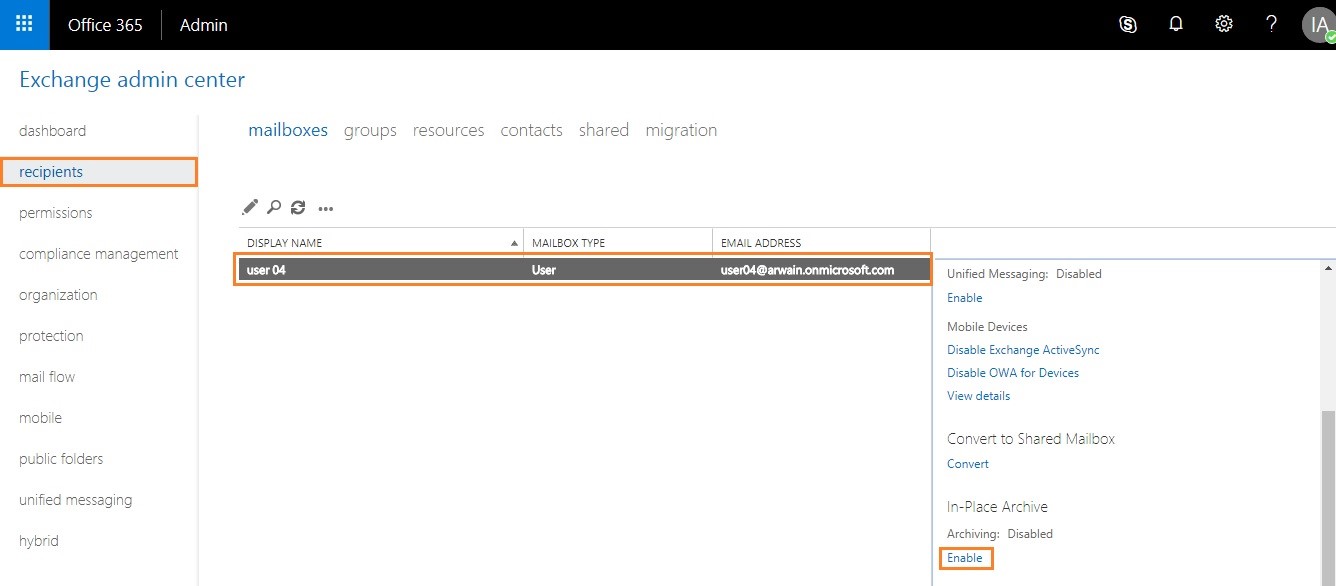
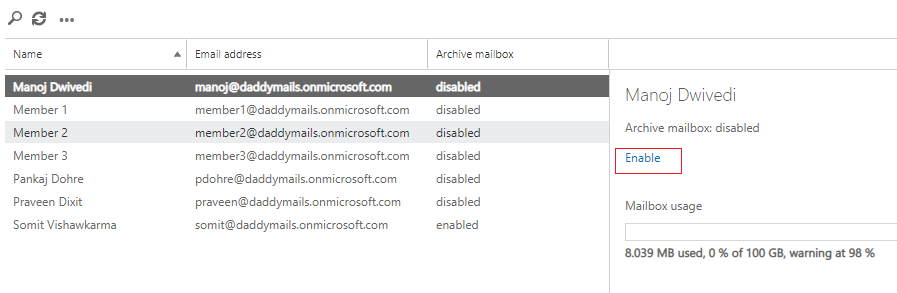
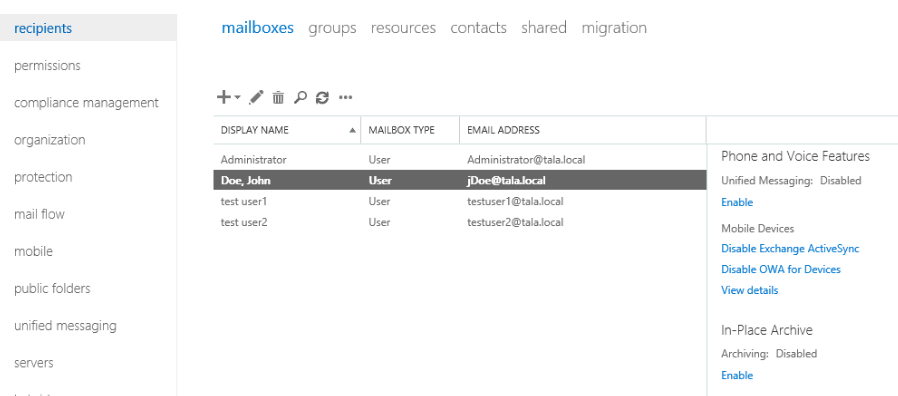
To enable the archive on a disabled users mailbox first select the user.
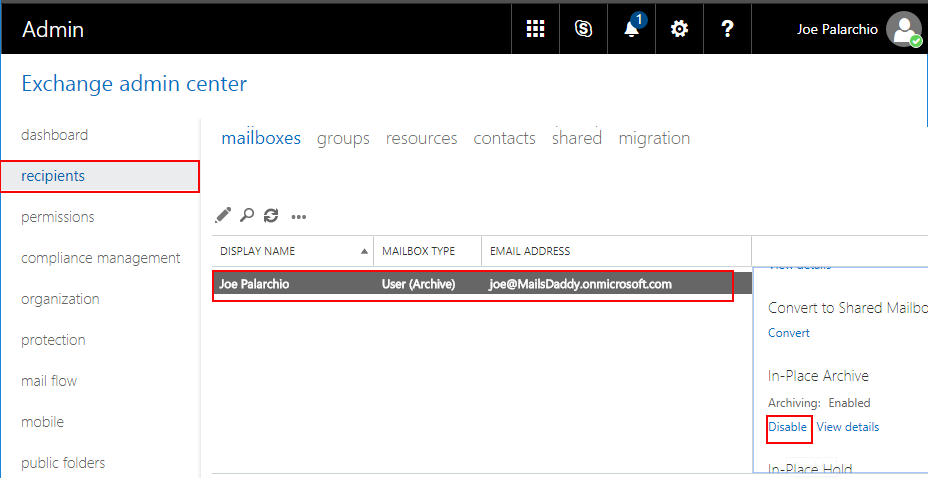
Enable mailbox archive. Click Recipients and then Mailboxes. To enable one or more mailboxes manually. Microsoft Office 365 allows archiving mailboxes in order to provide users with additional mailbox storage space.
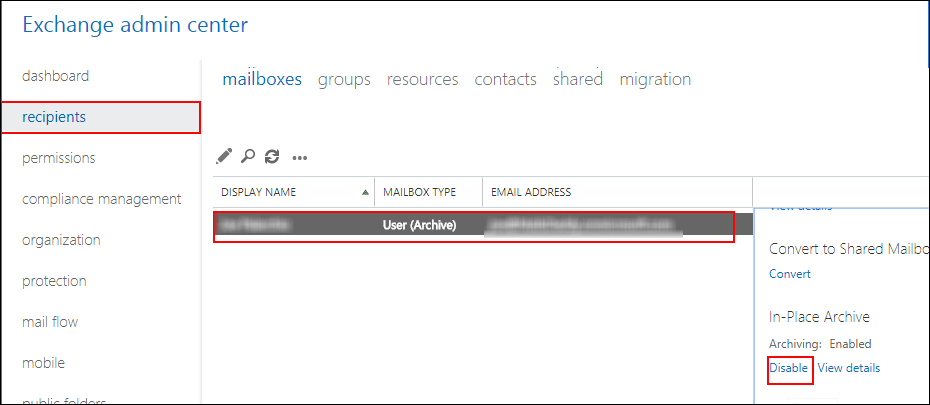
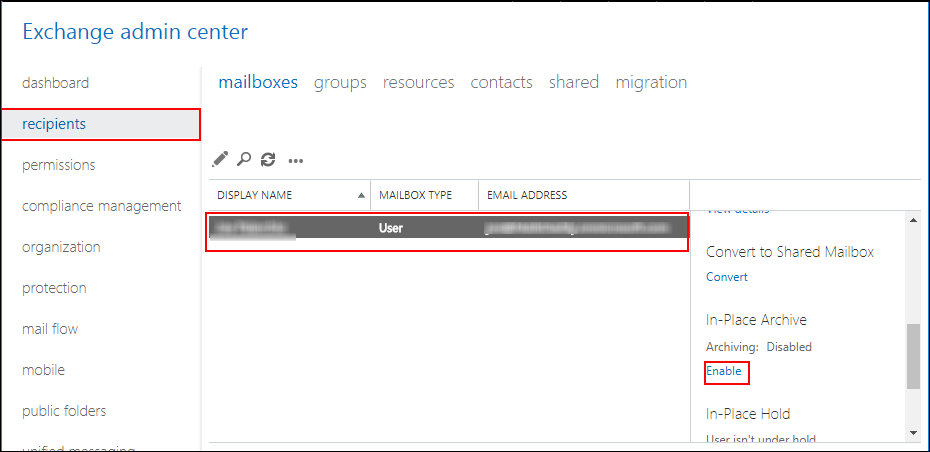
Tasks like migrating mailboxes monitoring processes maintaining public folders of Office 365 are done by EAC. This tutorial will help you understand how to enable archive mailbox in office 365 using EAC or powershell and also describes creating or disabling an archive mailbox in Exchange Online. Use the EAC to enable an archive mailbox Go to Recipients Mailboxes.
We can see in the screenshot above my account already has Archive mailbox. In Exchange Online you use this cmdlet to add archive mailboxes for existing users and to enable auto-expanding archives. Sign in to Office 365 account.
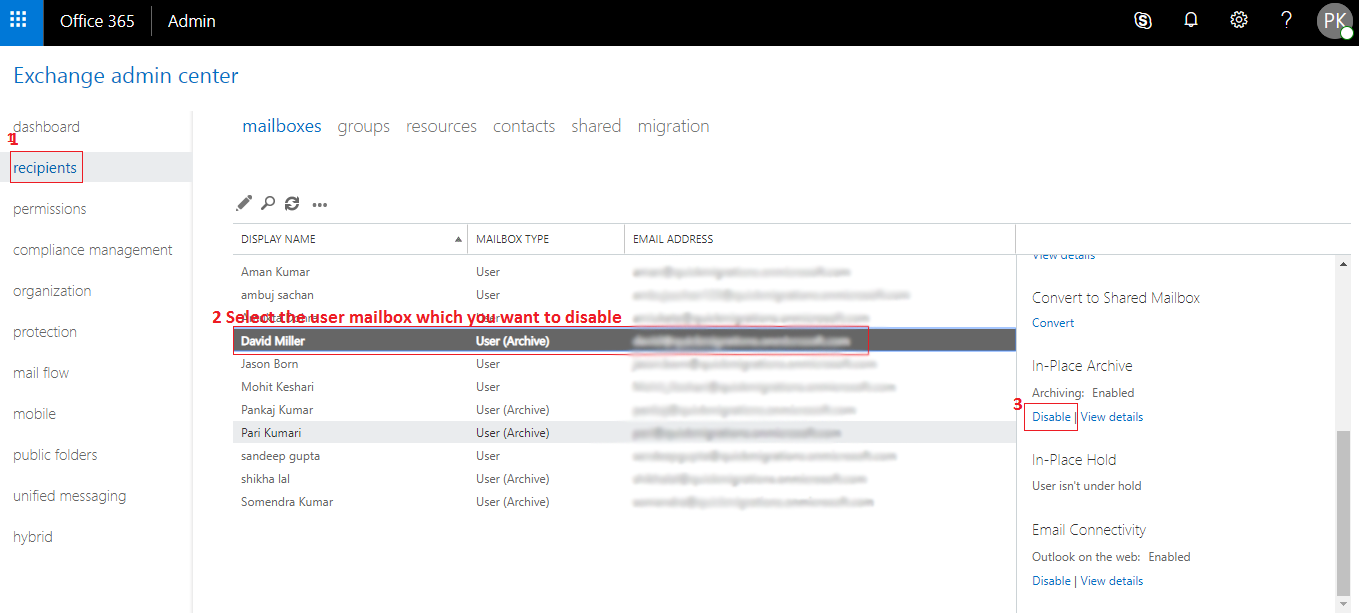
One easy way to add the archive mailbox is from the Exchange admin center recipients mailboxes just select a users mailbox to enable the archive from the right hand pane. Follow the instructions and click Help on any of the wizard screens for further information. Enable or Disable an Archive Mailbox Using Exchange Admin Center EAC Exchange Admin Center is a management console used to manage environment of Exchange Server.
Click the app launcher icon and then click Admin. How can we enable a remote mailbox and create an archive mailbox. Creates an archive mailbox in the service for the mailbox.
When their archive mailbox is enabled users can store messages in their archive mailbox also called an In-Place Archive. Even when a user is licensed I manually have to either go into Exchange Online Admin Centre or the Security Compliance Admin centre to enable their Archive Mailbox. Get-Mailbox -OrganizationalUnit DomainlocalSome OU Enable-Mailbox -Archive -ArchiveDatabase Name of DB Martina Miskovic Hi Do you want to enable Archiving.
Select the Mailbox which you want to Enable under in Place archive. See Creating shared archives for Exchange. In the Administration Console click Enable Mailbox on the Tools menu or click the Enable Mailboxes for Archiving icon on the toolbar.
The Enable Mailbox wizard starts. You can also use this cmdlet to create In-Place archives for existing mailboxes. Users can access their archive mailboxes by using Outlook and Outlook Web App.
Use the Enable-Mailbox cmdlet to create mailboxes for existing users who dont already have mailboxes. Enable Archive Mailbox using Exchange Admin Centre. Shared mailboxes dont require a separate license.
If you want to use the PowerShell command to enable the Archive Mailbox in Office 365 then follow the solution of the enabling the In-Place Archiving. In the details pane for the selected user click Enable. Enable an archive mailbox You can use the Exchange admin center or the Exchange Management Shell to enable archive mailboxes for users that already have a primary mailbox.
In the list of mailboxes select the user that you want to enable the archive mailbox for. Click the Admin centers and then click Exchange. To enable a cloud-based archive mailbox for this user you must use your on-premises Exchange admin centre or Exchange Management Shell The user that is connected to this mailbox is connected to our on-premises active directory not azure however we do not have an on premises exchange admin centre or exchange server as all our accounts are.
However if you want to enable In-Place Archive or put an In-Place Hold or a Litigation Hold on a shared mailbox you must assign an Exchange Online Plan 1 with Exchange Online Archiving or Exchange Online Plan 2 license to the shared mailbox. Based on another forum it looks like if we run the command 2 times it will both enable the mailbox and the archive. We are rolling out Office 365 E3E5 licenses and as part of this want all of our users to utilise their Online Archive mailbox moving forwards.
First of all open the Windows PowerShell as an administrator and put the following commands to enable the Archive mailbox in. If we have a lot of users do a search for the users name and then highlight the correct mailbox we want to change.

How To Export Exchange Archive Mailboxes To Pst
How To Enable Archiving For A Shared Mailbox Microsoft Community


How To Archive Office 365 Mailboxes Via Enable Archive Mailbox

How To Find All Exchange Server 2010 Mailboxes With Archive Enabled
Enable Mailbox Archiving Exchange Online Thatlazyadmin

How To Enable Disable The In Place Archive Mailbox In Office 365
How To Enable Or Disable An Archive Mailbox In Office 365 Mailsdaddy Official Blog

How To Enable Archive Mailbox On Exchange Server 2013 Using Powershell Learn It And Devops Daily

Enable The Archive Mailbox And Modify The Default Retention Policy For Cloud Only And Hybrid Users Itpromentor

Enable The Archive Mailbox And Modify The Default Retention Policy For Cloud Only And Hybrid Users Itpromentor

Archive Mailboxes In Exchange Online Thinking Fish

Erstellen Eines Cloudbasierten Archivs In Einer Exchange Hybridbereitstellung Microsoft Docs
How To Enable Or Disable An Archive Mailbox In Office 365
How To Enable Or Disable In Place Archive Mailbox In Office 365 Account
Enable Mailbox Archiving Exchange Online Thatlazyadmin

Learn How To Enable Or Disable An Archive Mailbox In Exchange Online Official Blog Free Viewers For Common Files
How To Enable Disable The In Place Archive Mailbox In Office 365

Exchange 2016 In Place Archive Explained Msexchangeguru Com
Learn How To Enable Or Disable An Archive Mailbox In Exchange Online Official Blog Free Viewers For Common Files

